Best Managed DLP Service Providers for IT Leaders in 2026
Managed DLP service providers handle deployment and tuning so DLP doesn't become shelfware. Compare Intrusion, Clear Technologies, Nexum, US Signal, Pentamix.

DLP projects fail not because the technology is bad, but because resource-strapped IT teams lack the bandwidth to deploy it properly, tune policies to reduce false positives, monitor alerts 24/7, and continuously adjust as business needs change.
If you're managing security with a skeleton crew, you've likely been told to "just implement DLP." But implementing DLP requires dedicated resources for data discovery, policy design, user communication, ongoing tuning, and incident response. These resources that a lot of IT teams simply don't have.
The practical answer isn't abandoning data protection or magically finding budget for three DLP administrators. It's managed DLP service providers who handle deployment, configuration, monitoring, and ongoing management so your team can focus on strategic initiatives rather than chasing false positives.
This article walks through the best managed DLP service providers for IT leaders in 2026, focusing on service scope, deployment approach, ongoing management capabilities, integration with existing security stacks, and transparent pricing models.
How to Evaluate Managed DLP Service Providers
Before talking to providers, answer these questions: What sensitive data do we need to protect (PII, PHI, financial records, intellectual property, credentials)? Where does that data live (endpoints, file servers, email, Microsoft 365, Google Workspace, other SaaS applications)? What's our primary driver—compliance requirements, insider threat prevention, accidental leak prevention, or IP protection? Do we want fully managed (completely hands-off) or co-managed (collaborative) services?
Service Scope and DLP Coverage
Evaluate which DLP platforms they specialize in deploying and managing (Microsoft Purview, Symantec, Forcepoint, or vendor-agnostic). Determine if they cover endpoint, network, and cloud/SaaS DLP or focus on specific areas. Understand their deployment models—cloud-native, on-premises, or hybrid. Ask if they provide data discovery services to scan and classify existing data. Clarify their policy development approach—pre-built templates or custom-designed for your business workflows.
Questions to ask: Which DLP platforms do you specialize in deploying and managing? Do you cover endpoint, network, and cloud/SaaS DLP, or focus on specific areas? Will you conduct data discovery to identify where our sensitive data lives? How do you approach policy design—templates or custom to our workflows?
Deployment and Implementation Approach
Evaluate their assessment process—do they start with comprehensive data and risk assessment? Get realistic implementation timelines from contract to production monitoring. Determine if they offer phased rollout options to start small and expand gradually. Understand their change management support for communicating policies to users. Clarify what professional services are included versus what costs extra.
Questions to ask: What's your typical implementation timeline from contract to live monitoring? Do you offer phased deployment, or is it all-or-nothing? How do you handle user communication and change management? What professional services are included in your base offering?
Ongoing Management and Tuning
Evaluate how often they review and adjust policies to reflect changing business needs. Understand their approach to reducing false positives over time. Clarify who monitors DLP alerts—your team or theirs. Define their incident response process when policy violations are detected. Determine reporting cadence for incidents, trends, and compliance.
Questions to ask: How much ongoing tuning is required, and who does it? How do you reduce false positives over time? Who monitors DLP alerts—do we still need internal resources, or is it fully managed? What's your incident response process when sensitive data is at risk?
Integration with Existing Security Stack
Evaluate SIEM integration capabilities to send DLP alerts to Splunk, Sentinel, or Chronicle. Determine SOAR integration for automated incident workflows. Assess IAM integration to leverage your identity provider for dynamic policy assignment. Check ticketing integration for incident workflows in ServiceNow or Jira. Understand EDR/XDR correlation capabilities for unified threat detection.
Questions to ask: How do you integrate with our existing SIEM and SOAR platforms? Can you leverage our identity provider for dynamic policy assignment? Do you integrate with our ticketing system for incident workflows? How do you correlate DLP events with other security telemetry?
Compliance and Reporting
Evaluate their compliance expertise in HIPAA, PCI-DSS, GDPR, CCPA, and SOC 2 frameworks. Determine if they provide pre-built compliance policy templates. Understand their audit support capabilities with reports and evidence. Assess custom reporting options tailored to board, compliance, and legal stakeholders. Verify their own compliance certifications (SOC 2, ISO 27001).
Questions to ask: What compliance frameworks do you have experience implementing DLP for? Do you provide pre-built policies for HIPAA, PCI-DSS, or GDPR? What reporting do you provide for audits and compliance reviews? What are your own compliance certifications?
Service Model and Support
Evaluate whether they offer fully managed (hands-off) or co-managed (collaborative) services. Determine support availability—24/7, business hours, US-based, or offshore. Clarify if you get dedicated resources or shared pool of analysts. Understand escalation paths to senior security architects. Assess account management frequency for business reviews and strategic planning.
Questions to ask: Is your service fully managed or co-managed? What's your support model—24/7, business hours, response SLAs? Do we get a dedicated DLP administrator or shared resources? How often do we have business reviews and strategic planning sessions?
Best Managed DLP Service Providers for IT Leaders
The following five managed DLP service providers represent different approaches to data protection, from network-focused threat detection to comprehensive managed security and strategic consulting. We've evaluated them based on service scope, deployment capabilities, ongoing management, and fit for different organizational needs.
Intrusion Inc. – Network-Based Data Protection and Threat Detection
Who they're best for
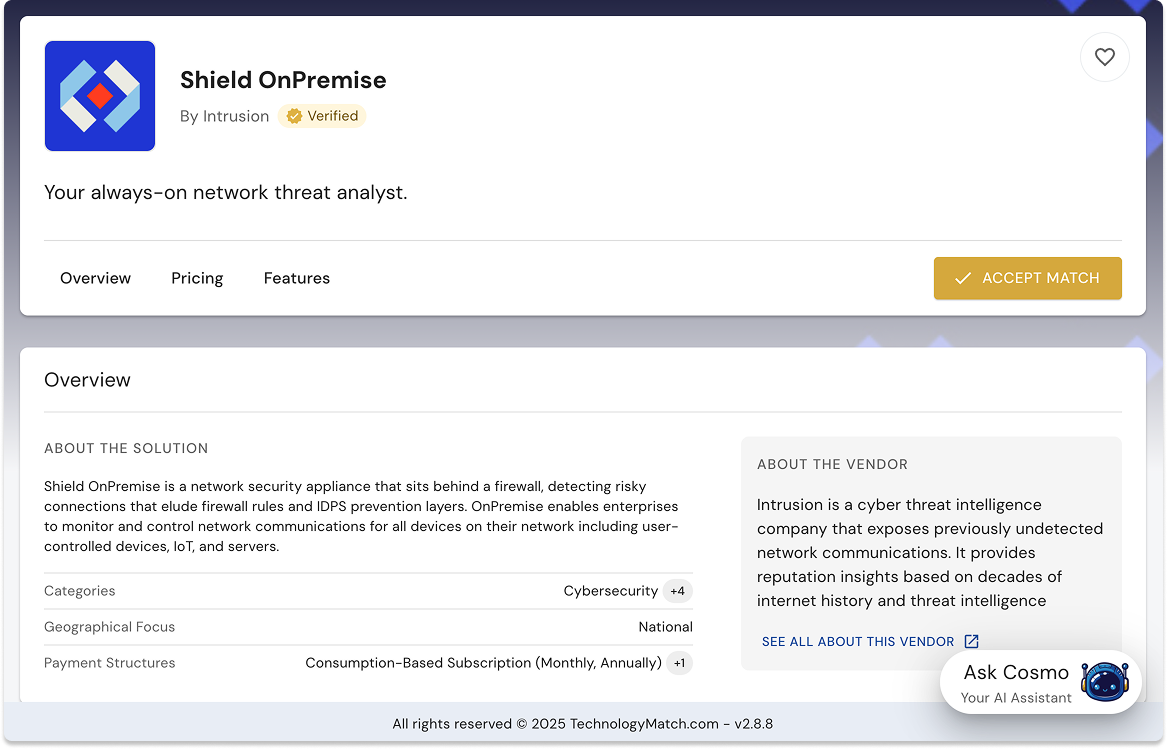
Intrusion is ideal for IT leaders who need network-level visibility and threat detection as a foundation for data protection. They're particularly strong for organizations concerned about data exfiltration through network channels and need real-time monitoring of all inbound and outbound communications.
Key capabilities
Intrusion provides network-based security through their Shield platform (on-premise, cloud, and endpoint variants) powered by their Global Threat Engine. While not a traditional DLP provider, they offer complementary data protection through comprehensive network monitoring and threat intelligence.
Their managed services include 24/7 threat hunting, monitoring of all network communications without traffic sampling, real-time identification of malicious connections, and integration with existing security architecture. Their applied threat intelligence approach helps identify data exfiltration attempts by detecting communication with known malicious IPs and command-and-control infrastructure.
Strengths
Intrusion excels at network-level visibility—seeing every communication sent and received without traffic sampling or baselining delays. Their threat intelligence is trusted by the U.S. government and provides context on why specific communications are flagged as malicious. They integrate with existing security infrastructure with minimal changes. Their managed threat hunting service provides expert analysis without requiring internal SOC resources. Protection starts immediately when turned on, with no lengthy tuning period.
Limitations/Considerations
Intrusion focuses on network threat detection rather than content-aware data classification and policy enforcement. Best used as a complementary layer to detect data exfiltration attempts, not as a standalone DLP solution. Organizations needing endpoint DLP (USB control, clipboard monitoring) or cloud/SaaS DLP (Microsoft 365, Google Workspace) will need additional solutions.
Questions to ask Intrusion
How do your network monitoring capabilities complement traditional DLP solutions? Can you detect data exfiltration attempts even when traffic is encrypted? How do you integrate with existing DLP platforms for correlated threat detection? What does your managed threat hunting service include in terms of data protection investigations?
Clear Technologies - Comprehensive Data Management and Security MSP

Who they're best for
Clear Technologies is ideal for organizations that need a comprehensive managed service provider handling infrastructure, data management, and security under one roof. They're particularly strong for companies with complex data storage environments and those seeking a single point of contact for all IT and security needs.
Key capabilities
Clear Technologies provides managed IT services with strong focus on data storage, management, and protection. Their cybersecurity services include threat detection, data protection, and recovery solutions as part of their broader managed services portfolio.
Their approach includes cyber resiliency assessments to determine threats and vulnerabilities, customized security strategies focusing on data protection and recovery, managed services covering server, storage, and software products, and capacity planning-as-a-service for storage optimization. They partner with major vendors including IBM, Cisco, Palo Alto Networks, Pure Storage, and Microsoft to deliver comprehensive solutions.
Strengths
Clear Technologies excels as a single point of contact for data management and security, eliminating vendor coordination overhead. Their 29+ year partnership with IBM and expertise in IBM Power Systems makes them particularly strong for organizations with legacy infrastructure. They provide end-to-end services from assessment through implementation and ongoing management. Their capacity planning services help optimize storage costs while maintaining data protection and compliance.
Limitations/Considerations
As a regional MSP with Texas and Southwest focus, they may have geographic limitations for on-site support outside their primary markets. Their DLP capabilities are delivered through vendor partnerships rather than proprietary solutions. Best suited for organizations that want a comprehensive managed IT partner handling multiple functions, not just DLP-specific services.
Questions to ask Clear Technologies
Which DLP platforms do you typically deploy and manage for customers? How do you integrate DLP with data storage and backup solutions? What's your process for conducting cyber resiliency assessments that include data protection? Can you provide references from customers with similar data management and compliance needs?
Nexum Inc. – Holistic Managed Security Services
Who they're best for
Nexum is ideal for organizations that need comprehensive managed security services spanning network security, cloud security, and application security. As a Service-Disabled Veteran-Owned Small Business (SDVOSB) with SOC 2 Type 2 compliance, they're particularly well-suited for government contractors and organizations with veteran hiring preferences.
Key capabilities
Nexum provides managed security services through their first*defense® offering, which includes 24/7 monitoring, threat investigation, proactive blocking, and security component management. Their cybersecurity portfolio spans enterprise and network security, cloud security, application security, identity and access management, and security assessments.
Their managed security approach includes monitoring for attacks and investigating potential breaches, proactive threat blocking, keeping security components updated, and 24/7 US-based manufacturer-authorized support. They partner with major security vendors and provide professional services, authorized training courses, and holistic security consulting.
Strengths
Nexum's holistic approach to cybersecurity means data protection is part of a broader security strategy rather than an isolated point solution. Their 24/7 US-based support and manufacturer-authorized training provide strong technical depth. Their SDVOSB status and SOC 2 Type 2 compliance meet requirements for government and defense contractors. Their first*defense managed services can augment resource-strapped teams without requiring full-time security hires.
Limitations/Considerations
Nexum's website doesn't explicitly detail their DLP service offerings—you'll need to inquire about specific DLP capabilities and platforms they support. Their broad security focus means DLP may be one component of a larger security engagement rather than a standalone offering. Best suited for organizations looking for comprehensive managed security with data protection as one element.
Questions to ask Nexum
What DLP platforms do you support and manage as part of your first*defense services? How do you integrate DLP with your broader managed security offerings (MDR, vulnerability management, etc.)? What's your approach to policy development and tuning for data protection? Can you provide examples of DLP implementations you've managed for similar organizations?
US Signal – Infrastructure-Integrated Managed Security

Who they're best for
US Signal is ideal for organizations that need data center services, cloud hosting, and managed security under one provider. They're particularly strong for companies with significant infrastructure needs (colocation, private cloud, hybrid cloud) who want data protection integrated with their hosting and network environment.
Key capabilities
US Signal provides managed security services including Data Loss Prevention as part of their Secure Service Edge (SSE) and SASE offerings. According to their service documentation, they offer managed DLP as a cloud-based security service for SASE customers, with MRC-based pricing on licensed DLP bandwidth.
Their broader managed security portfolio includes managed firewalls, email security, website security, DDoS protection, and Managed Detection and Response (MDR). They operate 16 data centers across the U.S. and provide 24/7 expert support with localized service. Their cloud security services integrate with their data center and network offerings for unified operations.
Strengths
US Signal's integrated approach means your data protection, hosting, network, and security come from one provider with unified support and SLAs. Their nationwide data center presence with local support provides both scale and personalization. Their SASE/SSE offerings include DLP as a native component rather than a bolted-on service. Strong track record with enterprise customers including Corewell Health, MillerKnoll, Meijer, and Steelcase demonstrates capability at scale.
Limitations/Considerations
DLP is delivered as part of their broader SASE/SSE offering rather than a standalone managed service—may require purchasing broader security services. Best suited for organizations that can consolidate infrastructure and security with one provider. Geographic presence is primarily Midwest with select national markets—verify coverage in your regions.
Questions to ask US Signal
How is your managed DLP service delivered, standalone or as part of SASE/SSE? Which DLP platforms do you use for your managed services? Can we leverage our existing infrastructure with your managed DLP? What's the typical deployment timeline and what's required from our team? Can you provide references from customers using your managed DLP services?
Pentamix Security – Strategic Security Architecture and Implementation
Who they're best for
Pentamix Security is ideal for organizations that need expert security architecture and consulting to design and implement comprehensive data protection strategies. They're particularly strong for companies modernizing their security posture with cloud security, Zero Trust, and data protection built into modern architectures.
Key capabilities
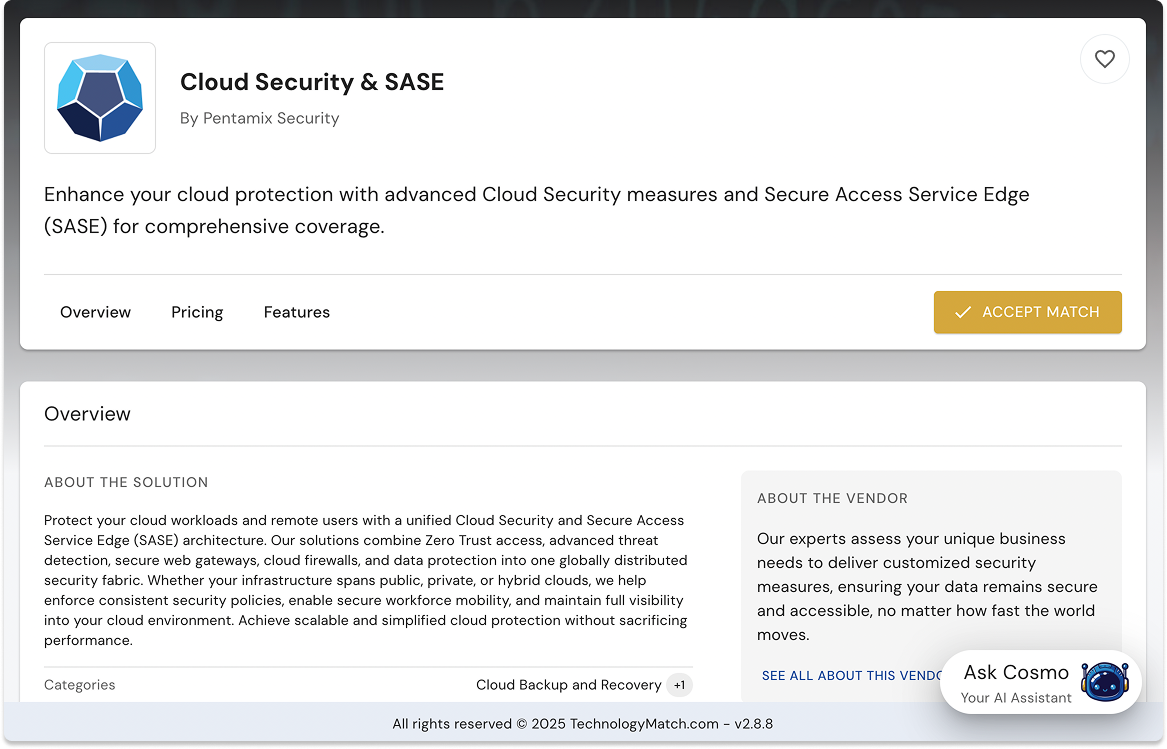
Pentamix Security provides cybersecurity consulting and implementation services with emphasis on cloud security, Zero Trust Network Access (ZTNA), and data protection. Their services include security architecture design, implementation support, and ongoing management tailored to specific business needs.
Their data protection capabilities span global data protection and access controls (classification, encryption, monitoring, governance across international environments), data lineage and protection (mapping data flows and implementing automated protection controls), and cloud security and SASE (unified security fabric with data protection built in). They partner with leading vendors including Palo Alto Networks, Zscaler, Netskope, CrowdStrike, Spirion (a specialized DLP vendor), and others.
Strengths
Pentamix excels at custom security architecture tailored to specific business needs rather than one-size-fits-all approaches. Their partnership with Spirion indicates specific DLP expertise and implementation capability. Strong focus on modern architectures (cloud-native, Zero Trust, SASE) where data protection is integrated rather than bolted on. Their workflow automation capabilities can streamline DLP policy enforcement and incident response. They provide gamified cybersecurity training to improve user awareness around data protection.
Limitations/Considerations
As a consulting and architecture firm, they may be better suited for designing and implementing DLP rather than ongoing day-to-day management. Organizations wanting fully hands-off managed services may need to clarify the level of ongoing operational support provided. Best suited for organizations willing to invest in proper architecture and strategic implementation rather than quick tactical deployments.
Questions to ask Pentamix Security
What's your approach to designing and implementing DLP as part of a broader security architecture? Which DLP platforms do you typically recommend and why? Do you provide ongoing managed services, or primarily implementation and consulting? How do you integrate DLP with Zero Trust and cloud security strategies? Can you provide examples of DLP architectures you've designed for similar organizations?
Comparative Analysis: Which Managed DLP Provider Fits Your Needs?
Service Scope and Approach
Deployment and Management
Decision Framework
Choose Intrusion if your primary concern is network-based data exfiltration and threat detection, you want real-time visibility into all network communications, you need to complement existing DLP with network-level monitoring, or you want managed threat hunting focused on data protection.
Choose Clear Technologies if you need a comprehensive MSP handling IT infrastructure and security, you have complex data storage environments (IBM, AIX, hybrid storage), you're in Texas or Southwest region and want local support, or you want one provider for data management, backup/DR, and security.
Choose Nexum if you need holistic managed security services including data protection, you value 24/7 US-based support and manufacturer-authorized expertise, you're a government contractor or SDVOSB-friendly organization, or you want first defense managed services to augment your internal team.
Choose US Signal if you need or want to consolidate data center, cloud, network, and security services, you're implementing SASE/SSE and want DLP integrated natively, you have multi-site operations and want local data center presence, or you prefer infrastructure-integrated security over standalone point solutions.
Choose Pentamix Security if you need expert security architecture for modern cloud-native environments, you're implementing Zero Trust, SASE, or DevSecOps with data protection built in, you want strategic consulting and custom implementation, or you're willing to invest in proper architecture for long-term data protection.
Also read: More SASE tools for IT leaders - comparing Zscaler, NetSkope, Palo Alto, and Cato.
Closing Thoughts
Choosing the right managed DLP provider comes down to finding a partner who understands your data landscape, has proven expertise with the platforms you need, provides the right service model for your team's capacity, and integrates with your existing security stack.
The five providers in this article take different approaches: network-focused threat detection (Intrusion), comprehensive managed IT (Clear Technologies and Nexum), infrastructure-integrated security (US Signal), and strategic architecture consulting (Pentamix). The right choice depends on whether you need network monitoring, full IT outsourcing, infrastructure consolidation, or custom security architecture.
For resource-strapped IT leaders, managed DLP services solve the gap between buying software and actually protecting data. The right provider handles deployment, tuning, and monitoring so DLP doesn't become shelfware.
Looking for IT partners?
Find your next IT partner on a curated marketplace of vetted vendors and save weeks of research. Your info stays anonymous until you choose to talk to them so you can avoid cold outreach. Always free to you.
FAQ
1. What is managed DLP and how is it different from DLP software?
Managed DLP is a service where third-party providers handle deployment, configuration, policy tuning, monitoring, and incident response for data loss prevention solutions, while DLP software (like Microsoft Purview or Symantec DLP) is a platform you license and manage yourself. Managed DLP services solve the resource gap that causes most DLP projects to fail—IT teams lack bandwidth to properly deploy, tune policies, monitor alerts 24/7, and continuously adjust as business needs change.
2. How much do managed DLP services cost for mid-market organizations?
Managed DLP services typically cost $50,000–$250,000+ annually depending on organization size, data complexity, and service scope, with pricing models including per-user ($10–$30/month), per-device, or flat managed services fees. Total cost includes DLP platform licensing (if not bundled), onboarding fees ($10K–$50K), professional services for policy design, and ongoing monitoring and tuning—always ask for total cost of ownership, not just per-user pricing.
3. What should be included in a managed DLP service?
Comprehensive managed DLP services should include data discovery and classification, policy design customized to your workflows and compliance requirements (HIPAA, PCI-DSS, GDPR), deployment and integration with existing security stack (SIEM, EDR, IAM), ongoing policy tuning to reduce false positives, 24/7 or business-hours monitoring, incident response, and compliance reporting for audits.
4. Can managed DLP providers work with my existing Microsoft Purview or Symantec DLP deployment?
Yes, many managed DLP providers work with existing platforms including Microsoft Purview, Symantec DLP, and Forcepoint through vendor partnerships and certified expertise. When evaluating providers, ask: "Can you manage our existing [platform name] deployment, or do we need to switch platforms?" and request customer references using the same DLP platform to verify proven experience.
5. How do I choose between fully managed and co-managed DLP services?
Choose fully managed DLP if you have minimal internal security resources and want hands-off operations with the provider handling all monitoring, tuning, and incident response. Choose co-managed DLP if you have some security capacity, want to maintain control over policy decisions, and prefer collaborative management, fully managed costs more but requires minimal internal effort, while co-managed costs less but requires 5–10 hours per week from your team.