IT Vendor Management: A Practical Guide for IT Leaders
IT vendor management is the process of working with external vendors and ensuring outcomes are achieved properly. This guide helps from IT vendor selection to renewal so you can eliminate shadow IT, reduce risk, and turn vendor chaos in advantge.
The days of managing a handful of on-premise hardware contracts are gone. You are no longer just managing servers. You are the conductor of a sprawling ecosystem of SaaS platforms, cloud infrastructure, managed service providers (MSPs), and hardware vendors.
IT vendor management has shifted from a back-office procurement task to a strategic competency. You cannot simply sign a contract and file it away. As reliance on external vendors for innovation and operations grows, the risks of poor management, ranging from data breaches to runaway costs, have never been higher.
IT vendor management is the process of overseeing and controlling contractual relationships with technology suppliers to maximize value and minimize risk. It is critical to distinguish "management" from simple "procurement."
Procurement focuses on the transaction and getting the ink dry on the contract. Vendor management is the discipline of overseeing day-to-day operations, ensuring delivery against Service Level Agreements (SLAs), and maintaining quality standards.
Think of it this way. Vendor management is the foundation that keeps the business running ("run the business" activities). Supplier Relationship Management (SRM) is the strategic layer built on top to drive long-term value and innovation ("grow the business" activities). You cannot have the latter without mastering the former.
If your strategy is reactive, you are likely bleeding resources in three specific areas:
- The Cost of "Shadow IT" & Waste: Without centralized visibility, organizations often pay for duplicate tools or unused seats. Businesses worldwide waste an average of $135,000 per year on SaaS services that go completely unused.
- The "Blind Spot" Risk: Your security posture is only as strong as your weakest vendor. Poor oversight can expose your business to data breaches and regulatory non-compliance. 65% of procurement leaders report having limited to no visibility beyond their Tier-1 suppliers, leaving them blind to sub-tier risks.
- Operational Drag: When vendors aren't held accountable to strict performance metrics, projects stall. Effective management ensures vendors deliver the speed, quality, and reliability your internal teams depend on.
We believe the most critical phase of management happens before the contract is signed. You cannot manage a bad match into a good partnership.
A vendor that is technically incompatible, culturally misaligned, or lacks necessary security certifications will drain resources regardless of how robust your management software is.
The IT Vendor Management Lifecycle
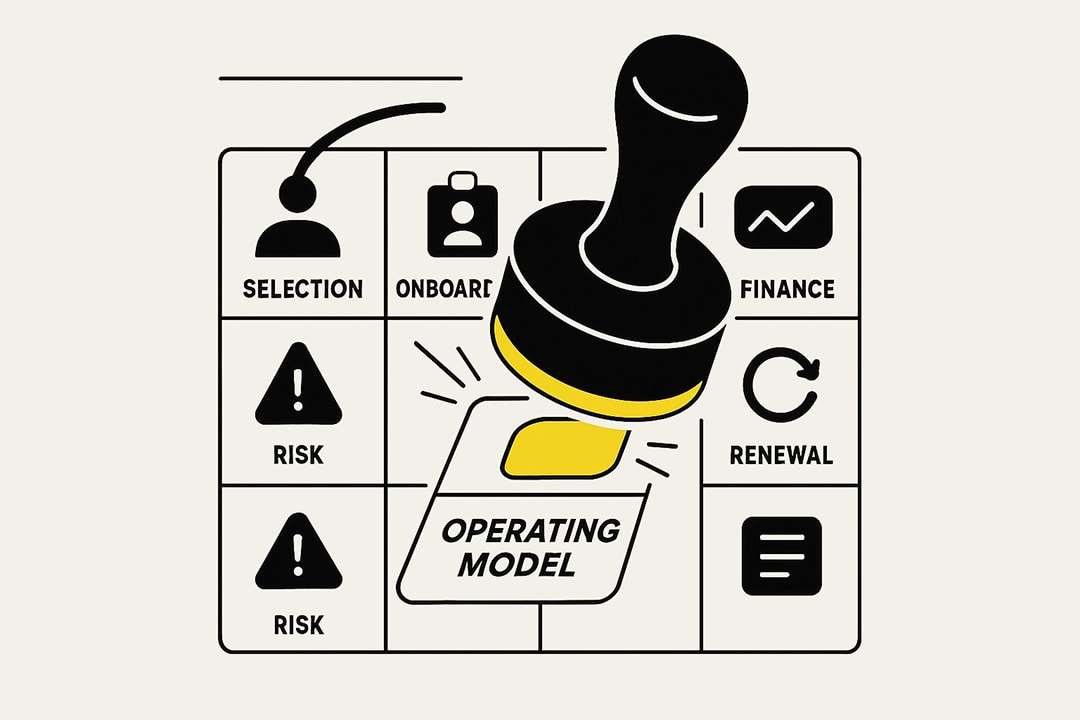
Effective IT vendor management follows a cyclical process. It is not linear. It requires constant re-evaluation and adjustment.
Sourcing & Selection: The "Match" Phase
This is where you win or lose. The goal is not just to find a vendor but to find the right vendor for your specific technical environment.
You must define clear business requirements and service level expectations before beginning the search. Involve stakeholders early to capture all technical needs and build consensus on how to vet potential vendors.
Key Selection Criteria for IT:
- Technical Compatibility: Does their API document look robust? Do they support your required identity providers (Okta, Azure AD)?
- Security Posture: Do not just ask if they are secure. Request their SOC 2 Type II report, ISO 27001 certification, and penetration test results.
- Scalability: Can they handle your projected load in 12 months? Ask for stress test data.
- Cultural Fit: Do they operate with an agile mindset or are they bureaucratic? A partnership mindset goes a long way.
Create a standardized solicitation format. This makes comparing responses simpler and more objective. You may have a gut feeling about a vendor, but you must substantiate that feeling through a formal process.
Contract Negotiation & SLAs
Once you select a vendor, you must formalize the relationship. This is where you protect your organization.
Negotiating contracts involves more than just price. You must define Service Level Agreements (SLAs) that specify metrics like uptime, defect rates, or response times.
Critical IT Contract Clauses:
- Uptime Guarantees: specific percentage (e.g., 99.99%) with financial penalties for breaches.
- Data Ownership: Clear language stating you own your data and code.
- Exit Strategy: How will you get your data back if you leave? In what format? At what cost?
- Security & Breach Notification: Mandatory timelines for notifying you of a security incident.
- Audit Rights: The right to audit their security practices or financial stability.
Understand your leverage. Timing matters. Suppliers facing end-of-quarter targets may offer better terms to secure your business. If you are scrambling to meet deadlines, you have less time to negotiate.
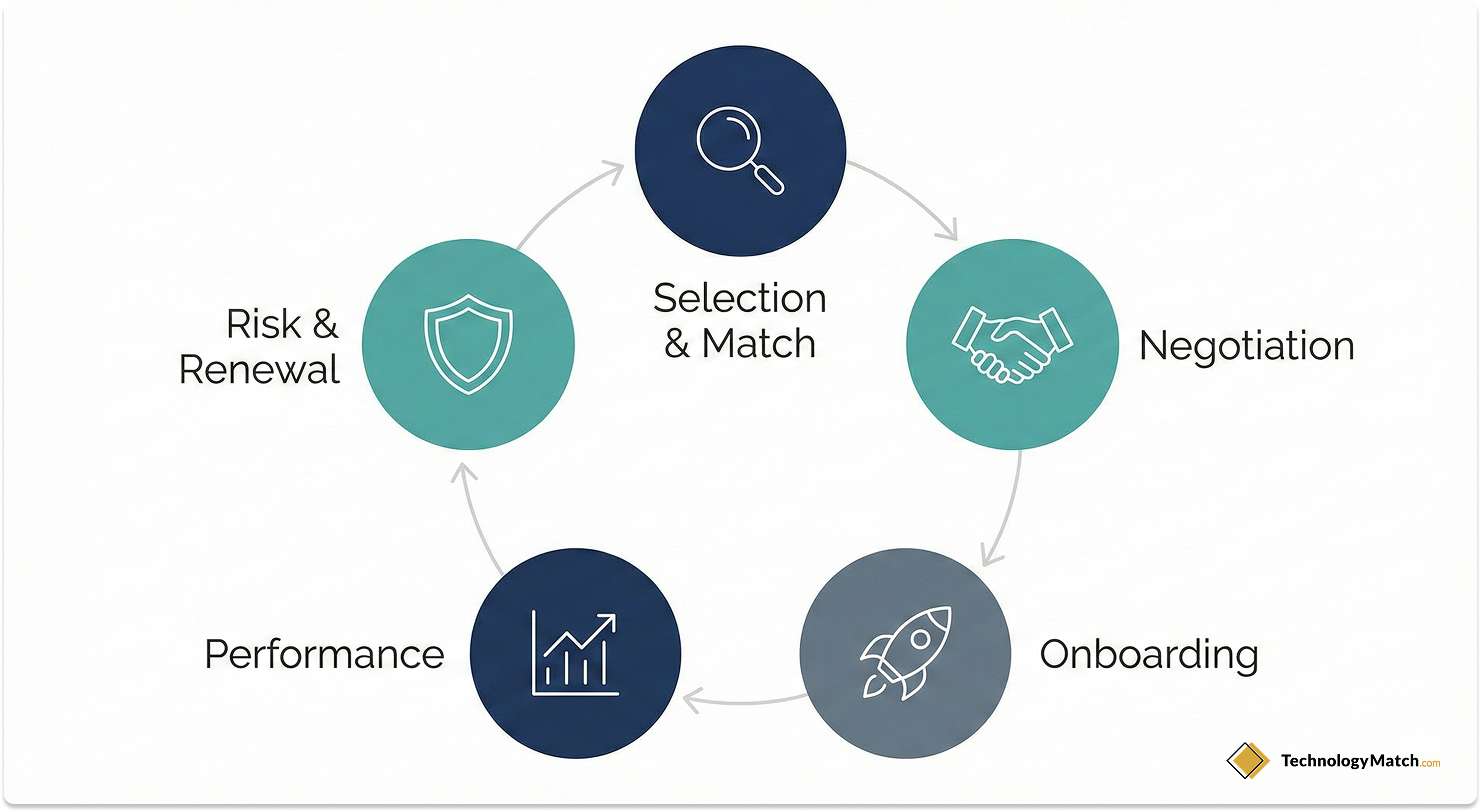
Onboarding & Integration
The contract is signed. Now you must integrate them into your ecosystem.
Onboarding is the process of integrating the vendor into your operations and systems. This ensures the vendor knows how to work with you efficiently before any real work begins.
The IT Onboarding Checklist:
- Identity & Access Management (IAM): Configure SSO and enforce Multi-Factor Authentication (MFA).
- Network Access: Set up VPNs or allowlist IPs if necessary.
- Data Flow Mapping: Document exactly what data is sent to them and how.
- Internal Ownership: Assign a technical owner and a business owner for the relationship.
- Training: Educate your team on how to use the new tool or service.
Automating this process can reduce the time to onboard new vendors by as much as 70-80%.
Performance Management
You cannot manage what you do not measure. Ongoing performance monitoring is the heart of vendor management.
You must track performance against the KPIs and SLAs defined in the contract.
Key IT Performance Metrics:
- SaaS: Uptime, API latency, support ticket resolution time, user adoption rates.
- Hardware: On-time delivery rate, defect rate (RMA percentage).
- Services/MSPs: Project milestone completion, adherence to budget.
Use vendor scorecards to collect data from internal systems (like JIRA or ServiceNow) and stakeholder feedback. Regular business reviews (QBRs) are the forum to discuss this data.
If a supplier is underperforming, address it constructively through a Corrective Action Plan (CAP).
Risk & Renewal
Vendor relationships are not static. Risks evolve and contracts expire.
Third-Party Risk Management (TPRM) focuses on identifying and mitigating risks associated with your vendors. This includes financial stability, operational capacity, and geopolitical risks.
The Renewal Trap: Do not let contracts auto-renew without review. If a vendor has performed well, renegotiate terms based on past performance data. If you decide to part ways, follow a controlled offboarding process.
Offboarding Steps:
- Revoke access to systems and facilities.
- Retrieve all data and intellectual property.
- Ensure final invoices are paid and obligations met.
- Conduct a post-mortem to learn for next time.
Managing Different Types of IT Vendors
Not all vendors are created equal. You cannot manage a strategic cloud provider the same way you manage a hardware reseller.
SaaS Vendors
The Challenge: Shadow IT and license waste.
The Strategy: Focus on utilization. Use automated tools to track login activity. If a user hasn't logged in for 90 days, reclaim the license. Identify duplicate tools (e.g., three different project management apps) and consolidate.
Key Metric: Cost per Active User.
Hardware Vendors
The Challenge: Supply chain disruptions and quality control.
The Strategy: Focus on reliability. Diversify your sources. Relying on a single vendor makes you vulnerable to shortages. Maintain strict quality control checks upon receipt.
Key Metric: On-Time Delivery Rate & Defect Rate.
Managed Service Providers (MSPs)
The Challenge: misalignment of incentives (Time vs. Output).
The Strategy: Focus on outcomes. Do not just track hours billed. Track deliverables. Ensure their communication rhythm matches your internal teams.
Key Metric: First-Contact Resolution Rate & SLA Adherence.
Common Challenges in IT Vendor Management (And Solutions)
Even with a solid process, challenges arise.
Shadow IT
The Problem: Marketing buys a tool without IT knowing. This leads to security gaps and wasted budget.
The Solution: Do not just ban it. That drives it further underground. Implement a "Paved Road" approach. Make the approved procurement process fast and easy. Offer a pre-vetted catalog of tools. Use Cloud Access Security Brokers (CASB) to detect unauthorized apps.
Centralizing the purchasing process ensures visibility and control.

Vendor Lock-in
The Problem: You build your entire stack on a proprietary platform and now cannot leave without massive cost.
The Solution: Design for portability. Use open standards and containers (Kubernetes). Avoid proprietary databases where possible. Negotiate clear data export clauses upfront.
Compliance Nightmares
The Problem: A vendor fails a GDPR audit, and you are liable.
The Solution: Automate compliance tracking. Use tools to track expiration dates of vendor certifications (ISO, SOC2). Require annual updated reports.
Lack of Visibility
The Problem: You do not know who your vendors' vendors are (Tier-2 risk). Disruption at a Tier-2 supplier is 21% higher than at Tier-1.
The Solution: Map your supply chain. Require critical vendors to disclose their sub-processors. Monitor news feeds for financial or geopolitical instability in their regions.
Best Practices for 2026
To truly excel, you must modernize your approach.

Centralize Your Data
Stop using spreadsheets. You need a Single Source of Truth. Centralized data means you always have up-to-date information on contracts, contacts, and performance history. This visibility is crucial for making quick decisions during disruptions.
Segment Your Vendors
Do not treat every vendor as a strategic partner. Segment them based on spend and criticality.
- Strategic Partners: High spend, high risk. Require quarterly business reviews (QBRs) and executive engagement.
- Tactical Vendors: Moderate spend. Annual reviews.
- Commodity Vendors: Low spend. Automated management.
Build Relationships, Not Just Contracts
Vendor management is not just about policing. It is about collaboration. Engage with your vendors. Share your product roadmaps (under NDA) so they can align their development with your needs. A strong relationship can lead to preferential treatment during shortages or access to beta features.
Integrate Finance & IT
Foster collaboration between IT and Finance. Shared access to vendor management platforms streamlines budgeting and cost tracking. An unhealthy supplier means an unhealthy customer, so monitor their financial health.
Tools for IT Vendor Management
You cannot scale this with email and Excel. You need the right tooling stack.
Vendor Management Systems (VMS)
A VMS acts as a centralized digital hub. It manages onboarding workflows, stores contracts, and tracks performance scorecards. Examples: Kodiak Hub, SAP Ariba, Coupa.
Here's a guide on choosing Vendor Management platforms and software.
SaaS Management Platforms (SMP)
These tools connect to your finance and SSO systems to discover every SaaS app in use. They help identify shadow IT and optimize license spend. Examples: Vendr, Zylo, BetterCloud.
Third-Party Risk Management (TPRM)
Specialized tools for assessing security and compliance risks. They automate the collection of security questionnaires and monitor external risk feeds. Examples: OneTrust, SecurityScorecard, UpGuard.
Closing Thoughts
IT vendor management is the discipline that turns external chaos into internal capability.
By implementing a structured lifecycle, you transform vendors from a cost center into a competitive advantage.
You reduce the risk of security breaches. You eliminate the waste of unused licenses. You gain the agility to pivot when the market changes.
It starts with the Match. Finding the right partner is the most important step. Once you have the match, you manage the relationship with transparency, data, and rigorous accountability.
If you are struggling to find the right IT partner to begin with, that is where the management process starts. You need a partner who aligns with your technical and cultural needs.
Start small. Centralize your contracts. Audit your shadow IT. And never stop measuring.
Looking for IT partners?
Find your next IT partner on a curated marketplace of vetted vendors and save weeks of research. Your info stays anonymous until you choose to talk to them so you can avoid cold outreach. Always free to you.
FAQ
What is the difference between IT Vendor Management and Procurement?
Procurement is the transactional process of finding and purchasing goods and services. IT Vendor Management is the ongoing discipline of overseeing the relationship, monitoring performance, mitigating risk, and ensuring the vendor delivers value throughout the contract lifecycle.
How do I identify Shadow IT in my organization?
Shadow IT refers to software/hardware bought without IT oversight. You can identify it by analyzing accounts payable data for unrecognized software vendors, using a Cloud Access Security Broker (CASB) to monitor network traffic, or employing a SaaS Management Platform (SMP) that integrates with your SSO and finance systems.
What are the most important KPIs for IT vendors?
The most critical KPIs depend on the vendor type. For SaaS, track Uptime/Availability, Support Response Time, and User Adoption Rates. For hardware, track On-Time Delivery and Defect Rates. For services, track SLA Adherence and Project Milestone Completion.
How often should I conduct vendor performance reviews?
For strategic, high-criticality vendors, you should conduct Quarterly Business Reviews (QBRs). For tactical vendors, bi-annual or annual reviews are sufficient. Regular feedback prevents small issues from becoming major failures.
What should be included in an IT vendor contract to reduce risk?
To reduce risk, every IT contract should include a clearly defined Service Level Agreement (SLA) with penalties for non-performance, a Data Ownership and Portability clause to prevent lock-in, strict Security and Breach Notification requirements, and a clear Termination/Exit Strategy.