Terraform vs. Ansible vs. Puppet vs. Chef: Which IaC Tool Is Right for IT Leaders?
IT leaders need IaC tools for faster deployments. This guide helps compare Terraform, Ansible, Puppet, and Chef, helping IT leaders choose an IaC tool that fits their team's skills, infrastructure, and automation priorities.

Infrastructure as Code has moved from DevOps buzzword to operational necessity. But when you're choosing between Terraform, Ansible, Puppet, and Chef, the decision isn't just about features. It's about how your team works, what you're managing, and where your infrastructure is heading.
These four tools overlap significantly but solve problems differently. Terraform excels at provisioning infrastructure. Ansible shines at configuration management. Puppet enforces desired state at scale. Chef provides code-driven automation for complex requirements.
The right infrastructure as code tool accelerates cloud migration and reduces manual errors. The wrong choice creates technical debt and slows modernization.

Understanding Infrastructure as Code Fundamentals
Before comparing specific tools, understand the fundamental approaches that differentiate them.
Orchestration vs. configuration management. Orchestration tools like Terraform provision infrastructure from scratch—creating VPCs, compute instances, and networks. Configuration management tools like Ansible, Puppet, and Chef configure existing systems by installing software and managing services.
Declarative vs. procedural. Declarative tools (Terraform, Puppet) let you define the desired end state. The tool figures out how to get there. Procedural tools (Ansible, Chef) require step-by-step instructions.
Mutable vs. immutable infrastructure. Mutable means updating existing servers in place. Immutable means destroying and recreating servers with each change. Terraform works best with immutable patterns. Ansible and Puppet handle both.
Agent-based vs. agentless. Agent-based tools (Puppet, Chef) require software on every managed node. Agentless tools (Terraform, Ansible) use SSH, WinRM, or cloud APIs.
Terraform
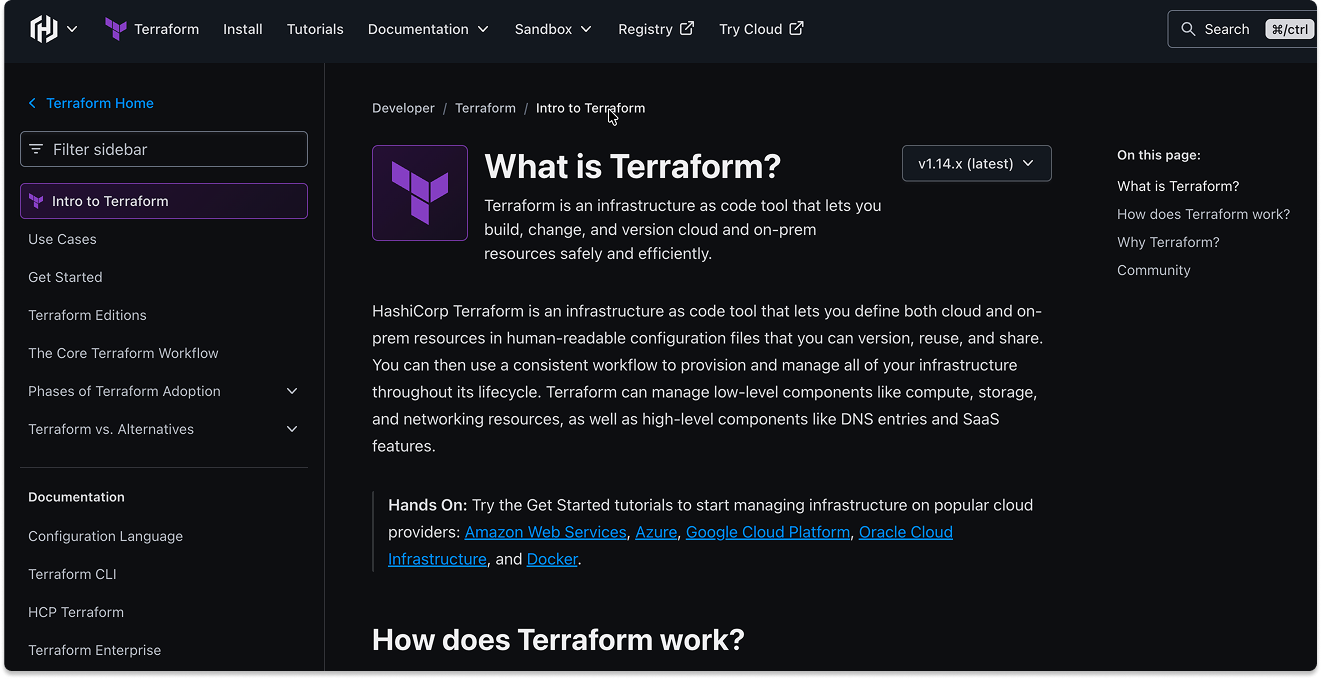
Terraform, created by HashiCorp, has become the industry standard for infrastructure provisioning in cloud environments.
What Terraform Does Well
Cloud-native provisioning excellence. Terraform manages infrastructure across AWS, Azure, Google Cloud, and 3,000+ providers. The provider ecosystem is unmatched. You can provision VPCs, compute instances, databases, load balancers, and security groups with declarative configuration.
For multi-cloud strategies, Terraform is the clear leader.
Infrastructure state management. Terraform maintains state files tracking what infrastructure exists and what changes need to be applied. This prevents configuration drift and enables safe, predictable changes.
State locking prevents concurrent modifications. Remote state backends enable team collaboration.
Plan and apply workflow provides safety. The terraform plan command shows exactly what changes will be made before applying them. This preview capability is critical for production environments.
IT leaders appreciate this for change management and compliance.
Modular and reusable code. Terraform modules enable infrastructure patterns to be packaged and reused. The Terraform Registry provides thousands of community modules.
Strong community and ecosystem. Massive adoption means extensive documentation, training resources, and available talent. Companies like Slack, Uber, and Starbucks use Terraform.
Where Terraform Falls Short
Limited configuration management. Terraform provisions infrastructure but doesn't configure operating systems or applications well. Once a VM exists, you need additional tools like Ansible for OS configuration and package installation.
State file complexity. State files contain sensitive data and must be stored securely, backed up reliably, and managed carefully. State file corruption can be catastrophic. Remote state backends solve this but add complexity.
No automatic rollback. Unlike CloudFormation, Terraform doesn't rollback when deployments fail.
Works best with immutable infrastructure. For traditional environments where servers are patched and updated in place over years, Terraform becomes awkward.
When Terraform Makes Sense
Choose Terraform when:
- Cloud infrastructure provisioning is your primary need
- Building or migrating to AWS, Azure, or Google Cloud
- Multi-cloud strategy requires consistent tooling
- Immutable infrastructure patterns are your goal
- Team has or can develop moderate coding skills
Ansible
Ansible, owned by Red Hat, is an agentless automation platform excelling at configuration management, application deployment, and orchestration.

What Ansible Does Well
Agentless architecture simplifies everything. Ansible requires no agents on managed nodes. It uses SSH for Linux and WinRM for Windows.
No software to install or maintain on target systems. Works immediately with existing infrastructure. Lower security surface area and operational overhead.
YAML-based playbooks are accessible. Ansible playbooks use human-readable YAML syntax. IT teams without development backgrounds become productive quickly.
This matters for organizations where infrastructure teams are operations-focused. Existing sysadmins can write playbooks within days.
Excellent configuration management. Ansible excels at:
- Configuring operating systems
- Installing packages and managing services
- Deploying applications
- Enforcing security baselines
- Orchestrating complex workflows
Idempotent operations mean playbooks run repeatedly safely—Ansible only makes changes when needed.
Strong orchestration capabilities. Ansible coordinates application deployments, rolling updates, blue-green deployments, and disaster recovery with conditional logic and error handling.
Broad platform support. Ansible modules support Linux, Windows, network devices, cloud platforms, containers, and hundreds of applications. Ansible Galaxy provides extensive community content.
Fastest learning curve. Teams start automating tasks within days rather than weeks.
Where Ansible Falls Short
Weaker infrastructure provisioning. While Ansible can provision cloud resources, it's not as elegant as Terraform. The workflow and state management aren't as refined.
Most teams use Terraform for provisioning and Ansible for configuration.
No native state management. Ansible is stateless. It doesn't track what infrastructure exists or maintain a source of truth, making drift detection harder.
Performance at scale. Ansible's SSH-based architecture can be slow when managing thousands of nodes. Agent-based tools handle large-scale deployments more efficiently.
Limited enterprise features in open source. Advanced capabilities like centralized logging, RBAC, and workflow approval require Ansible Tower or AWX.
One and done execution. Unlike Puppet, Ansible doesn't have agents continuously checking and fixing drift. You must run it repeatedly.
When Ansible Makes Sense
Choose Ansible when:
- Configuration management and application deployment are priorities
- Managing existing infrastructure, not just provisioning
- Team has limited coding experience
- Agentless architecture is preferred
- You need orchestration for complex workflows
- Mixed environment includes Linux, Windows, and network devices
Puppet
Puppet is a mature, agent-based configuration management platform designed for large-scale enterprise environments with compliance requirements.

What Puppet Does Well
Continuous desired state enforcement at scale. Puppet agents check in every 30 minutes, compare actual state to desired state, and automatically correct drift.
This continuous enforcement is powerful for compliance, security baselines, and preventing drift in large environments.
Enterprise-grade at massive scale. Puppet handles tens of thousands of nodes efficiently with master-agent architecture and compiled catalogs. Organizations like Walmart and Cisco run Puppet at enormous scale.
Strong compliance and reporting. Puppet Enterprise provides:
- Comprehensive reporting on configuration state
- Compliance status tracking
- Change history and audit trails
- Built-in CIS benchmarks and DISA STIGs integration
Mature ecosystem. The Puppet Forge provides thousands of pre-built modules. The ecosystem has matured over 15+ years.
Hieradata for flexible configuration. Manage unique configurations between environments while keeping modules lightweight.
Where Puppet Falls Short
Agent management overhead. Every node requires a Puppet agent installed, configured, and maintained. This creates ongoing work for installation, updates, certificate management, and connectivity.
For cloud-native or ephemeral infrastructure, this is awkward.
Steep learning curve. Puppet's DSL is complex. The learning curve is significant, especially for teams without programming backgrounds. Getting Puppet running takes longer than Ansible.
Explicit dependency management required. Unlike Ansible's sequential execution, Puppet modules can execute in any order. You must explicitly define dependencies, which can require multiple runs to complete successfully.
Limited cloud provisioning. Puppet relies on tools like Terraform to build infrastructure before taking over configuration.
Enterprise features require licensing. Puppet Enterprise provides necessary governance features. Open-source version is limited. Licensing costs are significant.
Declining market momentum. Puppet's position has weakened as Ansible and Terraform gained adoption. Smaller community and tighter job market for Puppet skills.
When Puppet Makes Sense
Choose Puppet when:
- Managing 10,000+ nodes at enterprise scale
- Continuous compliance enforcement is critical
- Regulated industry requires strong audit trails
- You have existing Puppet investment and expertise
- Traditional, long-lived infrastructure runs for years
- Configuration drift prevention is top priority
Chef
Chef treats infrastructure as code using Ruby. It's designed for organizations wanting maximum flexibility with programming approaches.

What Chef Does Well
Infrastructure as actual code. Chef uses Ruby for recipes and cookbooks. This is actual programming with full language capabilities—variables, conditionals, loops, and object-oriented patterns.
For teams with development skills, this enables sophisticated automation.
Maximum flexibility. Because you're writing Ruby code, you can implement any logic needed for complex requirements.
Test-driven infrastructure. Chef's ecosystem includes ChefSpec, InSpec, and Test Kitchen for comprehensive testing before production deployment.
Strong Windows support. Chef provides better Windows automation than alternatives with robust client and cookbook ecosystem.
Where Chef Falls Short
Highest learning curve. Chef requires Ruby programming knowledge. This is a significant barrier for traditional IT operations teams.
Finding Chef talent is harder than alternatives. Training takes months.
Agent-based complexity. Like Puppet, Chef requires agents on managed nodes, creating installation, maintenance, and connectivity overhead.
Declining market adoption. Chef's market position has weakened significantly. Progress Software acquired Chef in 2020. Momentum has shifted to Ansible and Terraform.
Community is smaller, innovation has slowed, and job market demand is declining.
Overkill for most use cases. Simpler tools like Ansible deliver value faster with less overhead for typical automation requirements.
Limited cloud provisioning. Chef wasn't designed for infrastructure provisioning.
When Chef Makes Sense
Choose Chef when:
- Team has strong Ruby and development skills
- Complex, unique automation needs maximum flexibility
- Test-driven infrastructure is a priority
- You have existing Chef investment
For new implementations in 2025, Chef is rarely the best choice. Ansible provides easier automation. Terraform handles provisioning better.
Comparing IaC Tools
Cloud infrastructure provisioning: Terraform wins. Purpose-built for multi-cloud provisioning with unmatched provider support.
Configuration management: Ansible wins for most teams. Agentless, accessible, fastest time to value. Puppet for enterprise-scale continuous enforcement.
Ease of adoption: Ansible wins. YAML-based, gentle learning curve, productive in days. Terraform is runner-up with moderate complexity.
Managing thousands of nodes: Puppet wins. Designed for enterprise scale with efficient agent architecture. Terraform for provisioning at scale.
Compliance and audit requirements: Puppet Enterprise wins. Comprehensive reporting, compliance frameworks, continuous enforcement. Terraform for infrastructure compliance.
Multi-cloud strategy: Terraform wins. Consistent syntax across all cloud providers.
Limited coding experience: Ansible wins. YAML is accessible for operations teams. Avoid Chef entirely.
Both provisioning and configuration: Terraform + Ansible. Modern standard for most organizations.
Making Your Decision
By Infrastructure Type
- Cloud-native/migrating: Terraform for provisioning + Ansible for configuration
- Traditional on-premises: Ansible for easiest automation path; Puppet for enterprise compliance
- Hybrid cloud + on-prem: Terraform for cloud + Ansible for configuration everywhere
- Container-heavy: Terraform for infrastructure + Kubernetes for orchestration
By Team Skills
- Operations-focused teams: Ansible (avoid Chef)
- DevOps-mature teams: Terraform + Ansible standard
- Small teams: Ansible for fastest value
By Scale and Compliance
- 10,000+ nodes with compliance: Puppet Enterprise
- 100-5,000 nodes: Ansible
- Regulated industries: Puppet Enterprise or Terraform Enterprise
By Strategic Direction
- Moving to immutable infrastructure: Terraform
- Maintaining traditional infrastructure: Ansible or Puppet
- Multi-cloud strategy: Terraform essential
The Modern Standard
For most IT organizations in 2025, the winning combination is Terraform + Ansible.
Use Terraform for infrastructure provisioning (creating cloud resources). Use Ansible for configuration management (installing software, deploying applications).
This provides:
- Best-in-class provisioning with Terraform's cloud support
- Accessible configuration with Ansible's agentless approach
- Clear separation of concerns
- Strong community support for both
- Available talent in job market
Closing Thoughts
Choose Terraform when cloud infrastructure provisioning is your primary need. It's the industry standard for multi-cloud infrastructure management.
Choose Ansible when configuration management, application deployment, and orchestration are priorities. Its agentless architecture and accessible YAML make it ideal for IT teams transitioning to automation.
Choose Puppet when managing large-scale enterprise infrastructure with strict compliance requirements. Puppet Enterprise provides governance, continuous enforcement, and reporting that regulated industries need.
Avoid Chef for new implementations unless you have strong Ruby skills and unique requirements. The market has moved to Ansible and Terraform.
The modern standard for most IT organizations is Terraform plus Ansible. Use Terraform for infrastructure provisioning and Ansible for configuration management.
Your decision should align with your infrastructure type, team skills, scale, and compliance requirements. When your infrastructure automation strategy affects deployment speed, security posture, and operational efficiency, choose tools that match your team's capabilities.
Looking for IT partners?
Find your next IT partner on a curated marketplace of vetted vendors and save weeks of research. Your info stays anonymous until you choose to talk to them so you can avoid cold outreach. Always free to you.
FAQ
What's the difference between Terraform and Ansible for IT leaders?
Terraform focuses on infrastructure provisioning, creating cloud resources like VMs, networks, and databases from scratch. Ansible focuses on configuration management, installing software and deploying applications on existing infrastructure. Terraform is declarative and maintains state while Ansible is procedural and stateless. Most IT teams use both: Terraform for provisioning infrastructure and Ansible for configuring it. They complement rather than replace each other.
Should IT leaders choose Puppet or Ansible for configuration management?
Ansible is better for most IT teams due to its agentless architecture, lower learning curve, and faster time to value. Choose Puppet when managing 10,000+ nodes with strict compliance requirements where continuous enforcement and comprehensive reporting justify the agent overhead and complexity. Ansible works well for small to mid-sized environments while Puppet is designed for enterprise-scale deployments with heavy governance needs.
Is Chef still relevant for infrastructure automation in 2025?
Chef's market relevance has declined significantly as Ansible and Terraform gained adoption. While powerful for teams with Ruby skills, Ansible provides easier automation and Terraform handles provisioning better. Chef makes sense only if you have existing investment, Ruby expertise, or unique requirements needing maximum flexibility. For new infrastructure as code implementations, choose Ansible for configuration management and Terraform for provisioning instead.
Can Terraform replace Ansible for IT automation?
No. Terraform provisions infrastructure but doesn't configure operating systems or applications well. Once Terraform creates a VM, you still need tools like Ansible to install packages, configure services, and deploy applications. The modern standard is using both tools together: Terraform for infrastructure provisioning and Ansible for configuration management and orchestration. They complement each other in the infrastructure as code workflow.
Which infrastructure as code tool has the easiest learning curve for IT teams?
Ansible has the gentlest learning curve with YAML-based playbooks that are human-readable and accessible to operations teams without coding backgrounds. Teams can become productive within days. Terraform is moderately complex but learnable with good documentation. Puppet and Chef have steep learning curves requiring significant training investment, with Chef being the most complex due to Ruby programming requirements.